
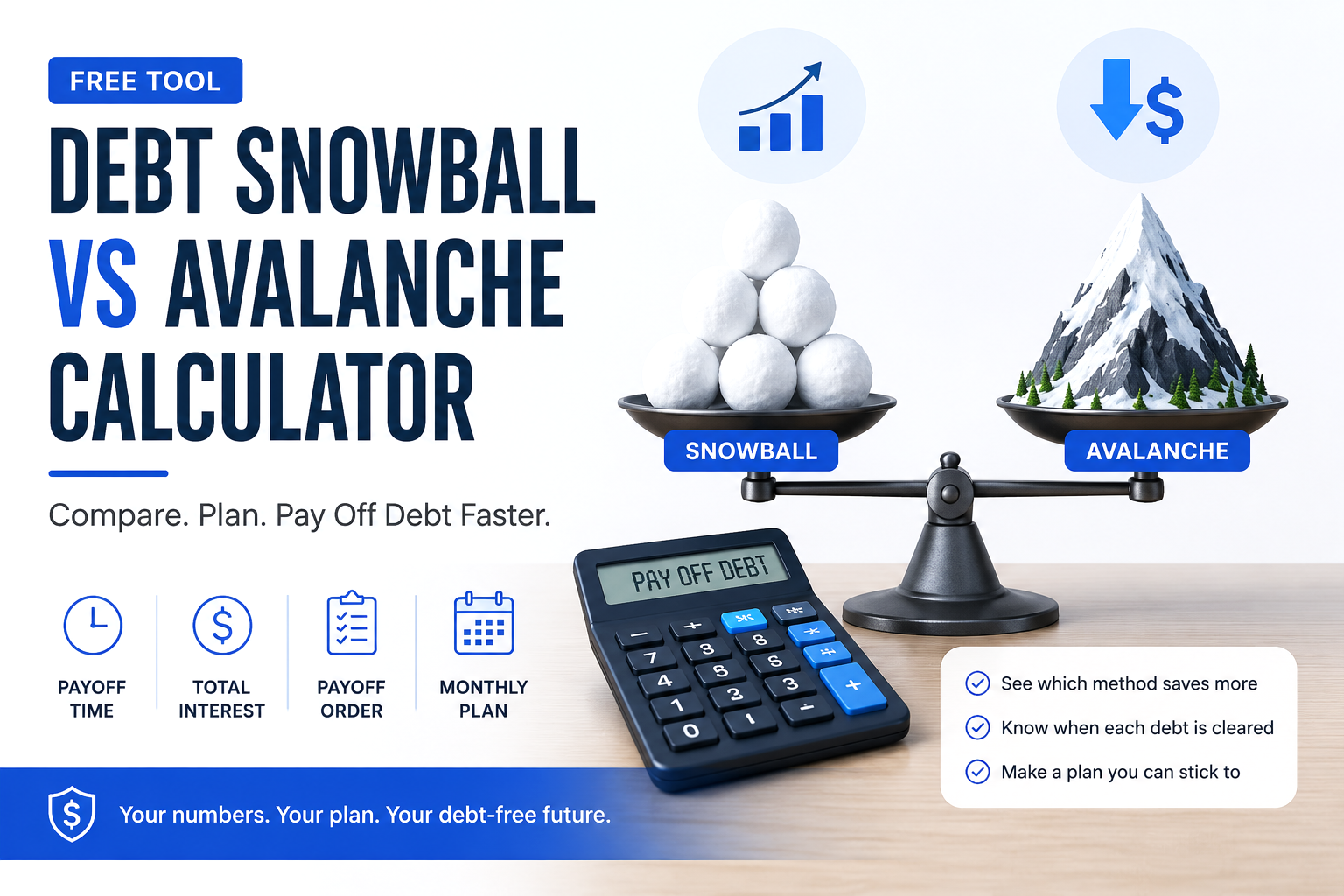
Free Debt Tool
Compare snowball and avalanche with your own debts
Add your balances, interest rates, minimum payments, and extra monthly payment. The calculator estimates payoff time, total interest, and which method may work better for your numbers.
Open the calculatorThis calculator compares the debt snowball and debt avalanche methods using your own numbers.
Add each debt, enter the balance, interest rate, minimum monthly payment, and the extra amount you can put toward debt each month. The calculator estimates how long each method may take, how much interest you may pay, and which debt may be cleared first.
What this calculator is for
This tool is useful when you have more than one debt and you are not sure which one to attack first.
The debt snowball method starts with the smallest balance. The debt avalanche method starts with the highest interest rate. Both can work, but they solve different problems.
Snowball is useful when you need a faster early win. Avalanche is usually better when the main goal is reducing interest cost. The calculator shows the difference so you do not have to guess.
How to use the calculator
Enter each debt on its own line. Use names you will recognize later, such as Visa card, Mastercard, student loan, car loan, personal loan, or line of credit.
For each debt, add three numbers:
- Balance: the amount you currently owe.
- APR: the annual interest rate on that debt.
- Minimum: the minimum monthly payment required.
Then enter your extra monthly payment. This means the money you can pay on top of all required minimum payments.
For example, if your minimum payments total $250 and you can afford another $150, enter $150 as the extra monthly payment. The calculator assumes you still make every minimum payment, then sends the extra money toward the debt chosen by each method.
How the calculator handles payments
The calculator keeps your minimum payments in the plan. When one debt is paid off, its payment rolls toward the next debt.
That rollover is important. It is why debt payoff can start slowly, then speed up after the first balance disappears.
The snowball version sends extra money to the smallest remaining balance. The avalanche version sends extra money to the highest remaining APR. If two debts are very close, the results may be almost the same.
What your result means
The result compares the two methods side by side.
Payoff time shows the estimated time until all listed debts are cleared.
Total interest shows the estimated interest paid during the payoff period. This is where avalanche often has an advantage, especially when one debt has a much higher rate than the others.
First debt cleared shows which balance may disappear first. This number matters because motivation is part of the decision. A plan that looks perfect but does not get followed is not very useful.
Suggested payoff order shows the order each method uses. If you name your debts clearly, this section becomes much easier to follow.
Why both methods may look identical
Sometimes the calculator may say both methods are almost identical. That is not an error.
This can happen when your balances and interest rates are close together. It can also happen when your extra monthly payment is large enough to clear the debts quickly. If everything is paid off in one or two months, the order does not have much time to affect the result.
In that case, choose the method that feels easier to follow.
When to be careful with the estimate
This calculator uses a simplified monthly interest estimate. It is useful for planning, but it may not match your lender statement exactly.
The estimate assumes fixed interest rates, fixed minimum payments, no fees, no new charges, and monthly interest calculation. Real debts can behave differently if your lender calculates interest daily, if your rate changes, if a promotional rate expires, or if you keep adding new purchases to the same account.
Also pay attention if the calculator warns that a minimum payment may not cover the interest being added. That means the debt may not shrink properly unless the payment changes.
What to do after using it
Run the calculator once with your current extra payment. Then try it again with a slightly higher number, even $25 or $50 more. Small increases can matter when the debt has a high interest rate.
If avalanche saves a meaningful amount and you can stick with it, that may be the better option. If the difference is small and snowball clears your first debt faster, snowball may be easier to stay with.
The goal is not to pick the method that sounds smartest. The goal is to pick a plan you can repeat without creating a new problem in your budget.
If you want the full breakdown of both methods, read the complete debt avalanche vs debt snowball guide.
Heads up: this calculator is for informational purposes only and does not count as financial advice. I am not a licensed financial advisor. Please speak with a qualified professional before making financial decisions.

Mike is a data analyst based in Niagara Falls, Ontario. He started ClearStack Finance after spending years figuring out personal finance the hard way. No financial jargon, no boring lectures, just practical money advice for people in their 20s and 30s who are still figuring it out.